-1.png?width=1344&height=896&name=Untitled%20design%20(18)-1.png)
Industry Aligned Skills
Build career ready skills in exercise physiology, strength and conditioning, nutrition, behavior change, and fitness business through Lionel’s online Bachelor of Science in Exercise Science.
Build expertise in human performance, exercise programming, physiology, biomechanics, and nutrition—preparing you for careers in fitness, wellness, and clinical exercise or advanced graduate study.
REAL-WORLD VALUE
Build career ready skills in exercise physiology, strength and conditioning, nutrition, behavior change, and fitness business through Lionel’s online Bachelor of Science in Exercise Science.
-1.png?width=1344&height=896&name=Untitled%20design%20(20)-1.png)
Earn industry recognized certifications including Certified Personal Trainer, Fitness Nutrition Specialist, and Strength and Conditioning Specialist while completing your exercise science degree.
-1.png?width=1344&height=896&name=Untitled%20design%20(22)-1.png)
Prepare for careers in personal training, performance coaching, and wellness leadership with practical, real world exercise science training and Career Connect support.
CAREER-READY SKILLS
In Lionel University’s Bachelor of Science in Exercise Science, you do not wait until graduation to build your professional profile. In your first few terms, you begin earning industry recognized personal training and fitness certifications while developing practical skills you can apply immediately in real world training environments.
Develop core competencies required for a Certified Personal Trainer career, including anatomy, exercise physiology, biomechanics, client assessment, program design, foundational nutrition, special populations training, and injury prevention.These are the essential technical skills required in personal training and strength coaching roles.
Learn how to assess movement patterns, design progressive strength and conditioning programs, and adapt workouts for athletes and general fitness clients. Build confidence in delivering safe, results driven coaching aligned with industry standards in performance training.
Develop foundational knowledge in fitness nutrition, lifestyle coaching, and recovery strategies that support long term health, performance, and longevity.
Strengthen the leadership and communication skills required to motivate clients, build trust, and create lasting behavior change in fitness and wellness settings.
Develop the business skills required to build and sustain a successful career in the Exercise Science industry. Learn the fundamentals of client acquisition and retention, service pricing and positioning, marketing strategies for Exercise Science professionals, and personal branding.
Learn how to guide clients beyond workouts by understanding the psychology of motivation and sustainable habit formation. Study behavior change theory, adherence strategies, accountability systems, and communication techniques that build trust and long term results.
CAREER OPPORTUNITIES
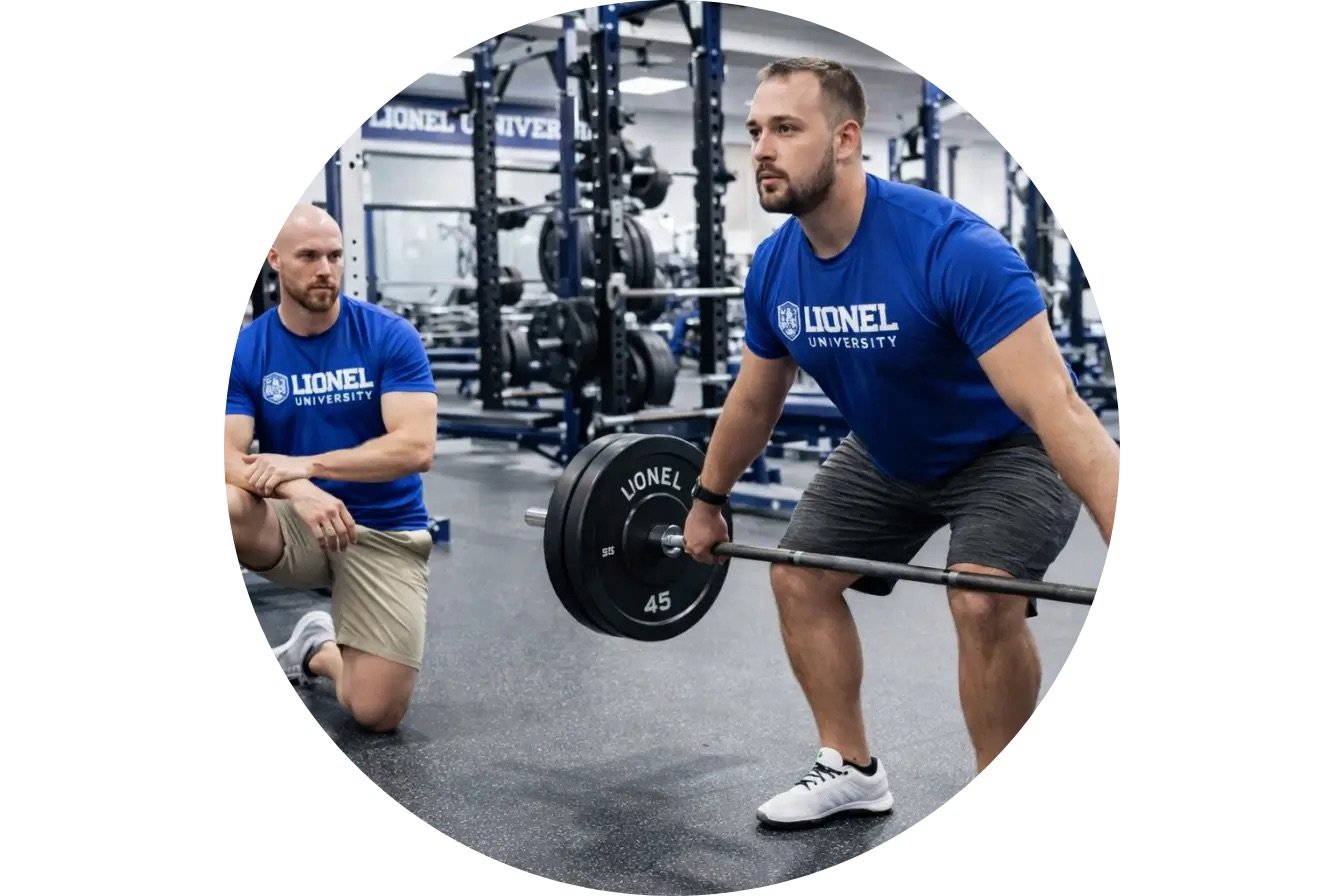
Skills learned in this program include:
Professional Standards and Ethics
Data and Information Management
Program Quality and Management
Leadership and Coaching
Fitness Business Management
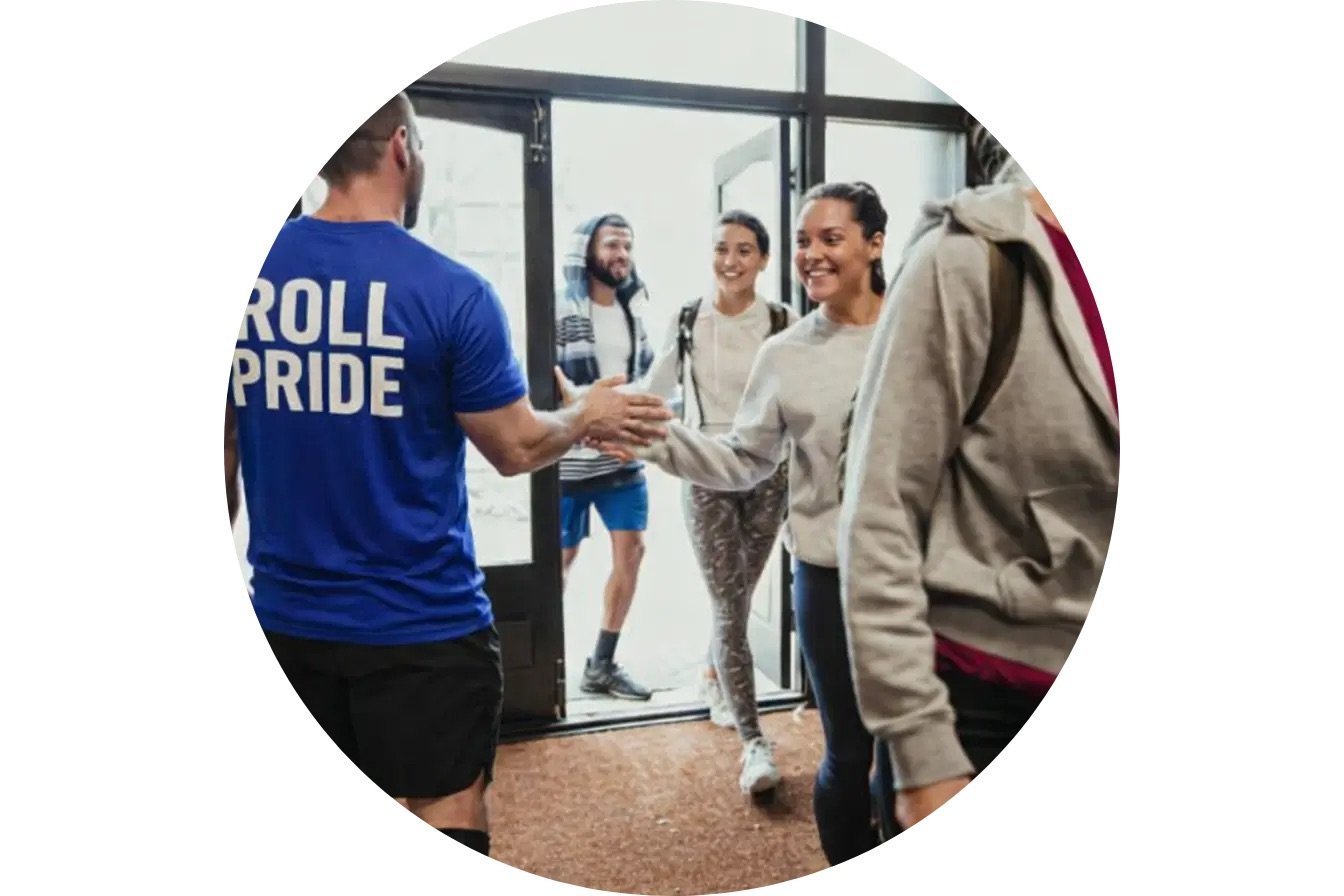
Our B.S. EXSC Can Prepare You to Be:
Strength and Conditioning Coach

From Elite Sport to Corporate Wellness:
Professional Sports Teams
Take our 3-minute Exercise Science Readiness Quiz and get a personalized report on your strengths, interests, and potential career fit.
Take the 3-Minute Readiness QuizExpert Faculty
At Lionel University, our faculty aren’t just educators — they’re pioneers, practitioners, and mentors. Each one brings real-world experience from the fields of exercise science, fitness, performance, recovery, and wellness directly into the online classroom.
Instructors scored 4.6–4.8 out of 5 on average across all categories

Chancellor
Chief Academic Officer
.png "dr-erin-nitschke (1)")
Dean of Academic Innovation & Graduate Studies
.png?width=1344&height=896&name=Copy%20of%20Copy%20of%20Untitled%20(6).png "Copy of Copy of Untitled (6)")
CAREER OUTLOOK
According to the U.S. Bureau of Labor Statistics, employment across exercise science and fitness related occupations is projected to grow faster than average between 2024 and 2034, as organizations increasingly prioritize prevention, performance, and long term health.
INDUSTRY GROWTH
Healthcare is shifting from treatment to prevention, recovery, and longevity. Increasing demand for exercise science professionals who improve performance and reduce chronic disease risk.
Professional sports teams, Olympic programs, tactical units, and elite performance centers are investing heavily in strength and conditioning specialists and sports scientists.
Companies, schools, and municipalities are prioritizing employee wellness, injury prevention, and performance optimization. Creating new leadership roles in fitness and wellness management.
An aging population and rising lifestyle-related conditions are driving demand for qualified professionals trained in exercise physiology, behavior change, and long-term health programming.
Take our 3-minute Exercise Science Readiness Quiz and get a personalized report on your strengths, interests, and potential career fit.
Take the 3-Minute Readiness QuizRecognition
Lionel University is recognized by respected accrediting and industry organizations.
Lionel University is accredited by the Distance Education Accrediting Commission (DEAC), a recognized accrediting agency by the U.S. Department of Education. See accreditation & disclosures
Note: Industry partners and recognitions shown do not imply endorsement of outcomes, employment, or licensure.

Lionel University has been fully accredited by the Distance Education Accrediting Commission since 2009, ensuring high quality, flexible education for online learners nationwide.
.png?width=140&height=140&name=MFS22-23_Gold_300x300%20(1).png)
Lionel University is honored to support military-connected students with flexible, career-focused education designed for those who serve and their families.
.png?width=220&height=90&name=HFA-Industry-Partner-yellow%20(2).png)
Our Certified Personal Trainer credential is recognized by the Health and Fitness Association, affirming alignment with national standards for fitness education.

Lionel University is designated as an Educational Recognition Program institution by the NSCA, a global leader in strength and conditioning standards.
COSTS AND FEES
Review the current undergraduate tuition rate and required fees for Lionel University students.
Students residing in the U.S., regardless of citizenship, and U.S. citizens residing abroad.
$333 / credit
Undergraduate tuition for international students.
$440 / credit
Paid per certification.
Paid once per quarter.
Paid once per quarter.
Digital textbooks are embedded into each course at no additional cost. Unrestricted access is available seven days prior to the start of class and throughout the quarter.
Apply at any time at no cost.
Our staff will review your transfer documentation at no cost.
Partners
We work with organizations across the fitness, wellness, and performance industries to create opportunities that help students grow professionally and prepare for long-term career success.

-1.png?width=200&height=58&name=WOAT_Logo%20(1)-1.png)
.png?width=1280&height=284&name=lifetime-429%20(2).png)


.png?width=1200&height=1201&name=Golds_Gym_logo(1).png)

Transfer More. Finish Faster.
You may be able to transfer up to 120 out of 180 credits for your bachelor’s degree through eligible college coursework, industry certifications, military training, or professional experience.
You may be able to transfer:
✓ Previously completed college coursework
✓ Industry certifications and credentials
✓ Military training and Joint Service Transcripts
✓ Relevant professional or technical education
Take our 3-minute Exercise Science Readiness Quiz and get a personalized report on your strengths, interests, and potential career fit.
Take the 3-Minute Readiness QuizCourse Curriculum
The Bachelor of Science in Exercise Science is a 180-quarter-credit degree designed to build a strong foundation in exercise science, human performance, coaching, and professional practice.
36
Credits of Core Degree Coursework
48
General Education
36
Bachelor's Degree Concentration
60
Exercise Science Core Courses
Core Courses - 36 Credits
Build the scientific, assessment, coaching, and professional foundations needed for advanced study in exercise science and human performance.
This course develops an advanced understanding of the progression from physical culture to exercise science with a focus on improving human performance, movement efficiency, and training outcomes. Students apply scientific principles to design and implement effective performance strategies.
This course provides foundational knowledge in functional anatomy and physiology, helping students understand key scientific principles that support health and human performance.
This course develops an advanced understanding of applied biomechanics and movement analysis with a focus on improving human performance, movement efficiency, and training outcomes. Students apply scientific principles to design and implement effective performance strategies.
This course develops essential skills through training principles and program design, supporting academic success and professional readiness across disciplines.
This course develops an advanced understanding of movement and performance assessment methods with a focus on improving human performance, movement efficiency, and training outcomes. Students apply scientific principles to design and implement effective performance strategies.
Description pending.
This course develops an advanced understanding of exercise programming for special populations with a focus on improving human performance, movement efficiency, and training outcomes. Students apply scientific principles to design and implement effective performance strategies.
This course develops coaching and communication strategies through the science of behavior change, focusing on behavior change, client engagement, motivation, adherence, and long-term success.
This course develops an advanced understanding of client acquisition and practice development in health and performance. Students develop professional skills that support client engagement, service delivery, and sustainable professional practice.
GENERAL EDUCATION - 48 Credits
Develop the scientific, quantitative, communication, social science, and critical-thinking skills needed for success in Exercise Science and related professional environments.
This course covers principles related to anatomy, physiology, biomechanics, client assessment, exercise program design, general nutrition principles, motivation, special populations, and injury prevention.
Human Anatomy and Physiology Lab is a study of the cells, tissues, and organ systems of the human body. Students examine the anatomy and basic functions of major organ systems, including the integumentary, skeletal, muscular, nervous, endocrine, circulatory, lymphatic, respiratory, digestive, urinary, and reproductive systems.
Students develop the writing process by learning to plan, draft, revise, and polish clear and professional written communication. The course builds writing skills applicable to academic, business, and coaching environments.
Students study the social, political, and economic forces that shaped the United States from its early beginnings through the Civil War while developing historical perspective applicable to contemporary society and leadership.
Students build practical mathematical skills through ratios, percentages, measurements, and solving for unknowns in real-world situations relevant to health, fitness, business, and everyday decision-making.
Students explore how people think and behave while learning psychological principles applicable to leadership, communication, coaching, motivation, and everyday life.
Students examine how society shapes behavior through topics including culture, inequality, family, social institutions, and social change. The course develops understanding of how individuals and communities interact within diverse social environments.
This course includes data presentation and summarization, introductory probability concepts and distributions, statistical inference, estimation, hypothesis testing, comparison of populations, correlation, and regression.
This course examines the history of American sport from its colonial beginnings through its development into a major cultural and economic institution. Students explore how sport has reflected and influenced political, economic, and cultural developments while examining issues related to race, gender, class, and nationalism.
This course provides an overview of general, organic, and biological chemistry. Students develop key chemistry and quantitative skills while examining scientific concepts relevant to health and human performance, including the chemical structures and functions of carbohydrates, proteins, and other biological compounds.
DEGREE CONCENTRATIONS — 36 CREDITS
Select a concentration aligned with your professional goals.
This course examines the scientific principles and applied methodologies required to design and lead structured performance training for groups and teams. Students explore musculoskeletal and physiological foundations, biomechanics, energy systems, and training adaptations within collective training environments. Emphasis is placed on group assessment strategies, periodization, exercise scaling and modification, safety management, equipment utilization, and session structure across cardiovascular, strength, and conditioning formats.
This course examines the scientific principles and applied methodologies of performance enhancement for athletic populations. Students explore neuromuscular physiology, biomechanics, bioenergetics, performance assessment, resistance training systems, power development, and periodization models. Emphasis is placed on sport-specific program design, seasonal training adaptation, recovery strategies, injury prevention, performance nutrition, supplementation science, and sport psychology principles.
This course examines leadership development and high-performance coaching principles within exercise and human performance environments. Students explore identity formation, emotional intelligence, communication strategies, culture-building practices, professional standards, and the interpersonal skills that define effective leadership.
This course introduces students to Lionel University and prepares them for academic, personal, and professional success in Exercise Science and Human Performance. Using the Train to Win framework, students engage in structured self-reflection, skill development, and leadership application through the ROAR model: Reflect, Own, Align, and Rise.
This course prepares students to take the first and next steps in their careers. Students explore career opportunities, develop a professional resume and cover letter, create an effective elevator pitch, and build interviewing and professional-readiness skills.
This course examines evidence-based corrective strategies designed to address movement dysfunction and restore performance capacity. Students explore skeletal, muscular, and neuromuscular system interactions associated with faulty movement patterns, joint instability, soft-tissue restrictions, and motor-control deficits. Emphasis is placed on movement analysis, stability and mobility integration, functional assessment, corrective programming, and professional scope of practice.
This course examines performance-development strategies specific to obstacle course racing and tactical-style endurance events. Students analyze metabolic demands, movement patterns, grip-strength development, load carriage, climbing mechanics, and hybrid strength-endurance integration. Emphasis is placed on needs analysis, acute-variable manipulation, seasonal preparation, hydration and fueling strategies, psychological resilience, and integrated strength, endurance, mobility, and mental-preparedness programming.
This course provides an in-depth scientific and practical exploration of the art and science of bodybuilding and physique development. Topics include advanced applied anatomy, hypertrophy physiology, biomechanics, nutrition for cutting and bulking, endocrine regulation, posing, peaking strategies, physique assessment, recovery modalities, injury risk factors, and competition preparation.
This course explores the principles and techniques of effective written business communication. Stu-dents will discuss, critique, and practice business writing strategies to produce good-news messages, bad-news messages, persuasive messages, reports, proposals and presentations, while developing critical thinking, researching and interviewing skills. Business communication in a global business environment is also emphasized.
This course examines leadership theory and administrative principles within exercise, sport, and performance facility environments. Students explore organizational leadership models, emotional intelligence, strategic vision development, culture-building practices, operational decision-making, change management, diversity and inclusion, and professional development systems. Emphasis is placed on applying leadership frameworks to sports and fitness organizations to promote performance excellence, ethical practice, and sustainable organizational growth.
This course focuses on the professional communication and service skills needed to improve member experience and retention in health clubs, fitness facilities, wellness centers, and performance environments. Students examine active listening, professional presence, behavioral style awareness, inclusive communication, service recovery, and consistent follow-through while exploring how customer experience influences trust, engagement, loyalty, belonging, and referrals.
This course introduces students to Lionel University and prepares them for academic, personal, and professional success through structured reflection, personal ownership, alignment, leadership, and professional development.
Students develop career-readiness skills including professional resumes, cover letters, interviewing, career exploration, and professional communication.
This course examines current issues in modern sport and fitness. Students explore opportunities within the sports and fitness management sector, develop management skills applicable across industry settings, and examine major challenges affecting different segments of the sports industry.
This course introduces key concepts related to the behaviors managers need to motivate people to perform. Students examine goal setting, performance rewards, individual beliefs and needs, fair performance assessment, employee motivation, and factors that contribute to workforce satisfaction and performance.
Communication skills are developed through the use of effective listening, speaking, and writing skills. The student will develop the ability to speak clearly and effectively by learning to plan, compose and deliver ideas. Emphasis is on the global, ethical, technological, and customer service aspects of communication.
This course examines evidence-based corrective strategies designed to address movement dysfunction and restore performance capacity. Students explore skeletal, muscular, and neuromuscular system interactions as they relate to faulty movement patterns, joint instability, soft-tissue restrictions, and motor-control deficits. Emphasis is placed on movement analysis, stability and mobility integration, functional assessment, corrective exercise programming, and professional scope of practice.
This course examines the scientific principles and applied methodologies required to design and lead structured performance training for groups and teams. Students explore biomechanics, energy systems, training adaptations, group assessment strategies, program design, exercise modification, safety management, and professional leadership within group-based performance settings.
This course examines leadership development and high-performance coaching principles within exercise and human performance environments. Students develop communication, emotional intelligence, culture-building, identity, and leadership skills applicable to individual and group coaching.
Students develop academic, personal, and professional skills through the Train to Win framework and the ROAR model: Reflect, Own, Align, and Rise.
Students develop career-readiness skills through career exploration, resume and cover-letter development, interviewing preparation, professional communication, and personal branding.
This course examines communication and relationship-building as essential components of effective coaching. Students develop strategies for active listening, effective questioning, client-centered communication, and building trust and rapport. Emphasis is placed on understanding individual motivations, strengthening client engagement, navigating communication challenges, and creating supportive coaching relationships that encourage meaningful and sustainable change.
Description coming soon.
Description coming soon.
Description coming soon.
This advanced course focuses on the application of coaching frameworks to facilitate sustainable behavior change and improve client outcomes. Students integrate assessment, communication, and behavior-change strategies to design and implement personalized coaching interventions. Emphasis is placed on promoting client autonomy, enhancing motivation, and supporting long-term adherence in health and performance settings.
This course prepares students to assess clients holistically by examining behavioral, environmental, and lifestyle factors that influence health and performance. Students learn to identify root causes of client challenges, analyze patterns in behavior and decision-making, and synthesize findings into actionable, evidence-based coaching strategies. Emphasis is placed on integrating assessment data to design personalized interventions that support sustainable behavior change.
Students develop academic, personal, leadership, and professional skills through the ROAR framework: Reflect, Own, Align, and Rise.
Students prepare for professional opportunities through career exploration, resume and cover-letter development, interviewing skills, professional communication, and career planning.
This course explores nutrition in context: diets, culture, and critical analysis and its impact on health, performance, and recovery. Students apply nutrition science to support real-world coaching and sustainable client outcomes.
This course introduces the foundational principles of effective coaching practice, with an emphasis on developing a professional coaching identity and approach. Students explore coaching methodologies, professional standards, ethical practice, and strategies for supporting client development and behavior change. The course prepares students to establish a purposeful and professional approach to coaching within health, fitness, wellness, and exercise-related settings.
Description pending.
Exercise Science CORE - 60 Credits
Advanced coursework builds deeper competency in rehabilitation, lifespan performance, nutrition and metabolism, psychology, communication, kinesiology, biomechanics, exercise physiology, research, and professional application.
This course examines foundational and applied principles of therapeutic exercise within the continuum of musculoskeletal rehabilitation and return-to-performance models. Students explore tissue healing physiology, clinical assessment techniques, therapeutic exercise progressions, neuromotor control development, and functional reintegration strategies. Emphasis is placed on evidence-based decision-making, movement analysis, corrective programming, and professional scope of practice.
This course examines physiological growth, maturation, and long-term athletic development principles as they relate to children and adolescents. Students explore pediatric metabolism, musculoskeletal development, neuromuscular coordination, body composition assessment, and age-appropriate training adaptation. Emphasis is placed on motor skill acquisition, strength and endurance development, plyometric training, sport psychology, youth nutrition, injury prevention, and safe program design.
This course provides an evidence-based examination of exercise programming for older adults grounded in aging physiology, functional health, and longevity. Students examine age-related changes across cardiovascular, pulmonary, musculoskeletal, endocrine, neurological, and metabolic systems and apply appropriate assessment and screening strategies. Emphasis is placed on supporting functional independence, chronic disease management, fall prevention, and quality of life.
This course provides an advanced, evidence-based examination of nutrition science and metabolic physiology as they relate to human performance, exercise adaptation, and body composition management. Students explore digestion and nutrient metabolism, macronutrients, micronutrients, nutrient timing, hydration and electrolytes, supplementation science, body composition, and nutrition for special populations.
This course examines advanced psychological theories and applied behavior-change strategies within exercise and human performance environments. Students explore the Transtheoretical Model of Change, Motivational Interviewing, Positive Psychology, Social Cognitive Theory, commitment strategies, readiness for change, intrinsic motivation, and structured transformation frameworks.
This course examines advanced public speaking and leadership communication strategies within performance, educational, and professional environments. Students develop skills in message construction, audience analysis, storytelling, delivery mechanics, rehearsal methodology, feedback integration, persuasive communication, stage presence, and professional confidence.
Students develop familiarity with the vocabulary and foundational principles of human anatomy and movement. The course examines how the nervous, circulatory, pulmonary, skeletal, and muscular systems contribute to movement and physical activity while helping students develop the ability to identify and address movement-related problems.
This course prepares students to design and implement exercise programs for individuals with diverse needs, including those with injuries, chronic conditions, physical limitations, and varying levels of ability. Students examine adaptive training, inclusive coaching, individualized program design, movement modification, safety, and strategies for maintaining performance outcomes while addressing individual needs.
This course covers the application of evidence-based practice in exercise science. Students learn about the important characteristics of evidence-based practice, the origins of evidence-based practice, and the practical application of evidence-based practice in exercise science. Topics covered include sources of evidence, reading and interpreting research evidence, developing a question, searching for evidence, evaluating evidence, incorporating evidence into practice, confirming evidence in the individual, and reevaluating evidence.
Students learn fundamental principles of biomechanics and their application to sport and human performance. Topics include kinetics, kinematics, forces, movement analysis, anatomical terminology, and the identification and correction of performance errors. Students apply biomechanical concepts to movement of the athlete, implements, opposition, and movement through fluid.
Students develop an understanding of physiological responses and adaptations to exercise and learn how to evaluate progress toward fitness and performance goals. The course prepares students to apply exercise physiology principles when working with diverse individuals and performance needs.
Students complete a culminating research project integrating theories, research methods, analytical skills, and substantive knowledge gained throughout the undergraduate Exercise Science curriculum. Research may incorporate principles of exercise and training, exercise techniques, program design and prescription, and testing and assessment of fitness, health, wellness, and human performance.
Take our 3-minute Exercise Science Readiness Quiz and get a personalized report on your strengths, interests, and potential career fit.
Take the 3-Minute Readiness QuizCareer Services
From enrollment through graduation and beyond, Lionel University students receive lifetime access to career coaching, professional development tools, and resources designed to help them achieve their goals.
✓ Personalized career coaching
✓ Resume and LinkedIn support
✓ Job search tools and resources
✓ Professional development guidance
✓ Lifetime access at no additional cost

The program requires 180 quarter credits and typically takes 4–5 years to complete. Transfer credits may reduce your time to graduation.
Yes. Courses are 100 percent online with 24/7 access and 5–10 week course formats designed for working adults.
Yes. You may transfer up to 70% of eligible college coursework, certifications, or military training. Approved credits can significantly shorten your path to completion.
Yes. Eligible students may apply for federal financial aid by completing the FAFSA and exploring available grants and loan programs.
Yes. Lionel University supports military affiliated students and accepts eligible military education benefits, including evaluation of Joint Service Transcripts.
Yes. Through Career Connect, students receive lifetime access to career coaching, professional development tools, and job search resources at no additional cost.
Yes. Lionel University is proud to be accredited by the Distance Education Accrediting Commission. DEAC is listed by the U.S. Department of Education as a recognized accrediting agency and is recognized by the Council for Higher Education Accreditation (CHEA).
Applying to Lionel University is simple. There is no application fee and no test scores are required for admission.